We use cookies to make your experience better. To comply with the new e-Privacy directive, we need to ask for your consent to set the cookies. Learn more.

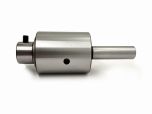
Rotary Broach Tool Holder shank MT3 for 1/2 (12.7mm) broaches
In stock
SKU
7426952024872
| Country | Ukraine |
|---|---|
| Manufacturer | TOKAR |
| total length | 190 |
| shank type | HA |
Rotary broach tool holder with an MT3 Morse taper shank for broaches with a 12.7 mm (1/2") mounting shank and 45 mm overall length. The bearing-supported spindle positions the broach at a fixed 1° inclination for progressive cutting of internal polygonal profiles. Tapered roller and angular contact bearings support combined axial and radial loads. Suitable for compatible lathes and turning centers with MT3 sockets. Holder length: 160 mm. Supplied without rotary broaches.
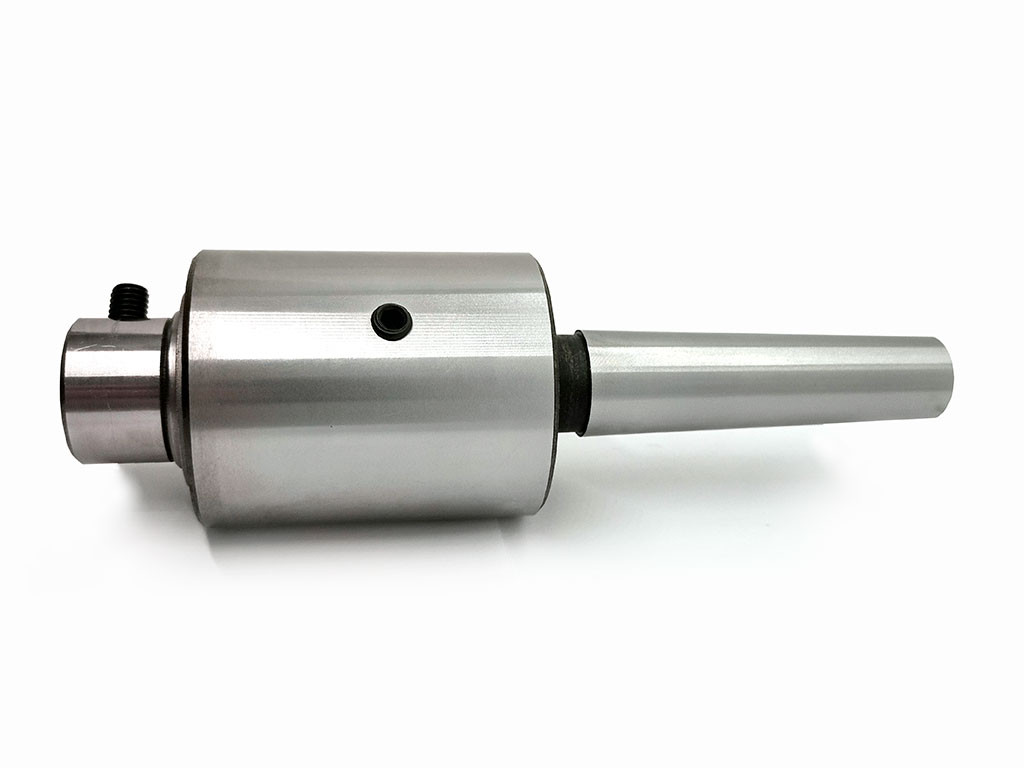


Rotary Broach Tool Holder – MT3 Morse Taper for 1/2" (12.7 mm) Broaches
Rotary broach holder with an MT3 Morse taper mounting shank for producing internal polygonal profiles on lathes, CNC turning centers and other compatible machine tools.
The holder supports an interchangeable rotary broach at a fixed inclination, providing the angular positioning and spindle rotation required for rotary broaching, also known as wobble broaching.
Operating Principle:
The broach is mounted in a bearing-supported spindle inclined relative to the holder centerline. During axial feeding, relative rotation between the broach and workpiece produces a wobbling motion that progressively brings the cutting edges into contact with the material.
On a conventional lathe, the holder body remains stationary while the rotating workpiece drives the freely rotating broach through cutting contact. Material is removed progressively rather than by pressing all cutting edges into the workpiece simultaneously.
The resulting profile geometry is determined by the installed broach. Depending on its cutting configuration, the holder can be used to produce internal hexagonal, square and other compatible polygonal forms.
1° Broach Inclination:
The fixed angular offset creates the cutting kinematics required for rotary broaching. It allows successive cutting edges to engage the workpiece as the tool advances, reducing simultaneous cutting-edge loading compared with direct axial pressing of a stationary form tool.
The inclination is built into the broach spindle assembly. The holder itself must remain correctly aligned with the workpiece axis; intentionally tilting the machine spindle or tailstock is not required.
Bearing-Supported Spindle:
The rotating spindle incorporates tapered roller and angular contact bearings to support the combined axial and radial forces generated during broaching.
Axial loading results primarily from tool feed and cutting resistance, while radial forces arise from the inclined broach axis and changing cutting-edge engagement. The bearing assembly permits spindle rotation relative to the holder body while maintaining support under these operating loads.
Stable spindle support helps maintain consistent tool positioning and reduces unwanted movement that could affect cutting stability and finished profile accuracy.
MT3 Morse Taper Mounting:
The Morse Taper No. 3 shank provides direct mounting in a compatible tapered machine socket, such as a lathe tailstock quill or suitable spindle interface.
The tapered connection provides centering through mating conical surfaces and transfers operating loads to the machine. Before use, verify that the socket, axial retention arrangement and machine setup are suitable for rotary broaching.
Broach Compatibility:
The holder is designed for interchangeable rotary broaches with the specified cylindrical mounting shank and overall length. Different cutting profiles may be used without changing the holder, provided the broaches match its mounting dimensions and retention arrangement.
The holder supplies the required motion and tool support; the interchangeable broach performs the cutting and determines the finished profile dimensions.
In Practice:
Internal rotary broaching requires a previously drilled or bored pilot hole. The pilot-hole diameter and entry chamfer must be selected according to the broach geometry and the required finished profile.
Adequate chip clearance is particularly important when machining blind holes. Controlled axial feed, suitable lubrication and correct machine alignment help limit excessive cutting forces and premature broach wear.
Cutting parameters and permissible broaching depth depend on the broach design, profile size, workpiece material and machine rigidity. The holder is intended specifically for rotary broaching, not conventional drilling or milling.
Specification:
- Tool type: Rotary broach holder
- Mounting shank: MT3 Morse taper
- Taper designation: Morse Taper No. 3
- Overall length: 160 mm
- Broach shank diameter: 12.7 mm (1/2")
- Compatible broach length: 45 mm
- Broach inclination: 1°
- Spindle bearings: Tapered roller and angular contact
Operating Characteristics:
- Progressive cutting-edge engagement
- Freely rotating broach spindle
- Combined axial and radial load support
- Profile geometry determined by the installed broach
Mounting Requirements:
- Compatible MT3 machine socket
- Secure taper seating and suitable axial retention
- Correct alignment with the workpiece axis
- Compatible broach mounting and retention dimensions
Machining Requirements:
- Correctly sized pilot hole
- Suitable entry chamfer
- Adequate clearance for chips
- Controlled axial feed
- Lubrication appropriate for the material and broach
Use for:
- Internal hexagonal profiles
- Internal square profiles
- Other compatible polygonal profiles
- Rotary broaching on compatible lathes and CNC machines
Limitations:
- Requires a compatible rotary broach
- Not intended for conventional drilling or milling
- Does not correct an inaccurately positioned pilot hole
- Maximum profile size and cutting parameters are not specified
Scope of Supply:
1 × MT3 Rotary Broach Tool Holder
Rotary broaches are not included.
Write Your Own Review
Related Products
Check items to add to the cart or
More Choices: