14.5 мм Свердло кобальтове з конічним хвостовиком DIN 345 RN HSSCo
| drill bit diameter | 14.5 |
|---|---|
| length total | 212 |
| length cutting | 114 |
| shank type | MT2 |
| material | HSSCo |
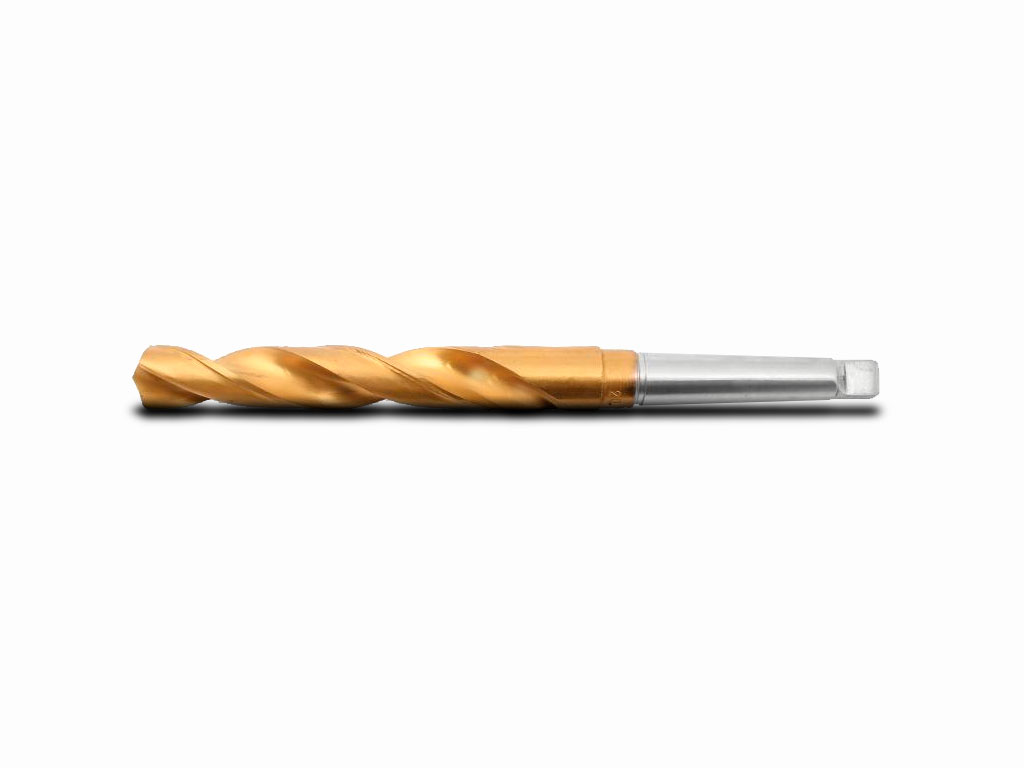
Cobalt Taper Shank Drills DIN 345 RN HSSCo
DIN 345 cobalt taper shank drills in RN execution feature a cutting section made from cobalt-alloyed high-speed steel (HSSCo). This material provides increased resistance to softening at elevated cutting temperatures. The Morse taper shank fits a matching machine spindle socket or suitable adapter sleeve.
Applications:
Used for drilling through holes and blind holes in metal components on drilling machines, lathes and other equipment with compatible taper toolholding. Applications include steel and stainless steel within the manufacturer’s recommended range, depending on workpiece hardness, drill geometry and machining conditions.
Operating Principle:
The cutting edges remove material through relative rotation between the drill and workpiece, while the spiral flutes carry chips away from the cutting zone. The HSSCo cutting section helps retain hardness at elevated temperatures. Correctly seated mating taper surfaces locate the tool and transmit torque through friction.
Diameter and Length:
The drill diameter determines the nominal hole size. Overall length, flute length and Morse taper size vary with the selected drill. Usable drilling depth also depends on chip evacuation, coolant access and the rigidity of the machine setup.
Cutting Material:
HSSCo contains cobalt as an alloying element in the high-speed steel rather than as a surface coating. The exact cobalt content and steel grade depend on the selected product. Increased hot hardness supports demanding drilling conditions, while suitable cutting parameters and lubrication remain necessary.
Tool Geometry:
DIN 345 specifies the dimensional series for twist drills with Morse taper shanks. RN identifies the tool execution. The exact point angle, helix angle, point grinding and any surface treatment should be checked in the specifications of the selected drill.
Practical Recommendations:
Clean and inspect the mating taper surfaces, confirm the correct taper size and seat the drill according to the machine manufacturer’s instructions. Secure the workpiece, maintain a steady axial feed and apply suitable cutting fluid. Clear chips as required and avoid prolonged rubbing when drilling materials prone to work hardening. Remove the drill using the appropriate ejector or drift.
Specifications:
- Tool type: cobalt taper shank twist drill
- Standard: DIN 345
- Execution: RN
- Cutting material: cobalt-alloyed high-speed steel (HSSCo)
- Shank type: Morse taper
- Morse taper size: depends on the selected drill
- Diameter: depends on the selected size
- Overall length: depends on the selected size
- Flute length: depends on the selected size
Cutting Characteristics:
The HSSCo cutting section offers increased resistance to heat-related softening compared with conventional HSS. Stable taper seating, low runout and effective chip evacuation help maintain cutting edge condition and hole quality.
Cutting Parameters:
Select spindle speed and feed according to drill diameter, HSSCo grade, workpiece material and hardness, hole depth and cooling conditions. Follow the manufacturer’s cutting data and check that the machine can accommodate the required torque and axial force.
Suitable Operations:
- Drilling through holes and blind holes in metal
- Machining steel and stainless steel within the recommended range
- Drilling on machines with compatible Morse taper sockets
- Preparing holes for subsequent tapping, boring or reaming
Limitations:
HSSCo does not establish suitability for every hardened steel or heat-resistant alloy. The shank requires a matching taper socket or suitable adapter. Incorrect seating, damaged taper surfaces and chip blockage can cause tool damage. Avoid lateral loading; tight hole tolerances may require a subsequent finishing operation.