
0.19 мм Свердло середньої серії по металу DIN 338 RN
| drill bit diameter | 0.19 |
|---|---|
| length total | 19 |
| length cutting | 4 |
| shank type | HA |
| material | HSS |
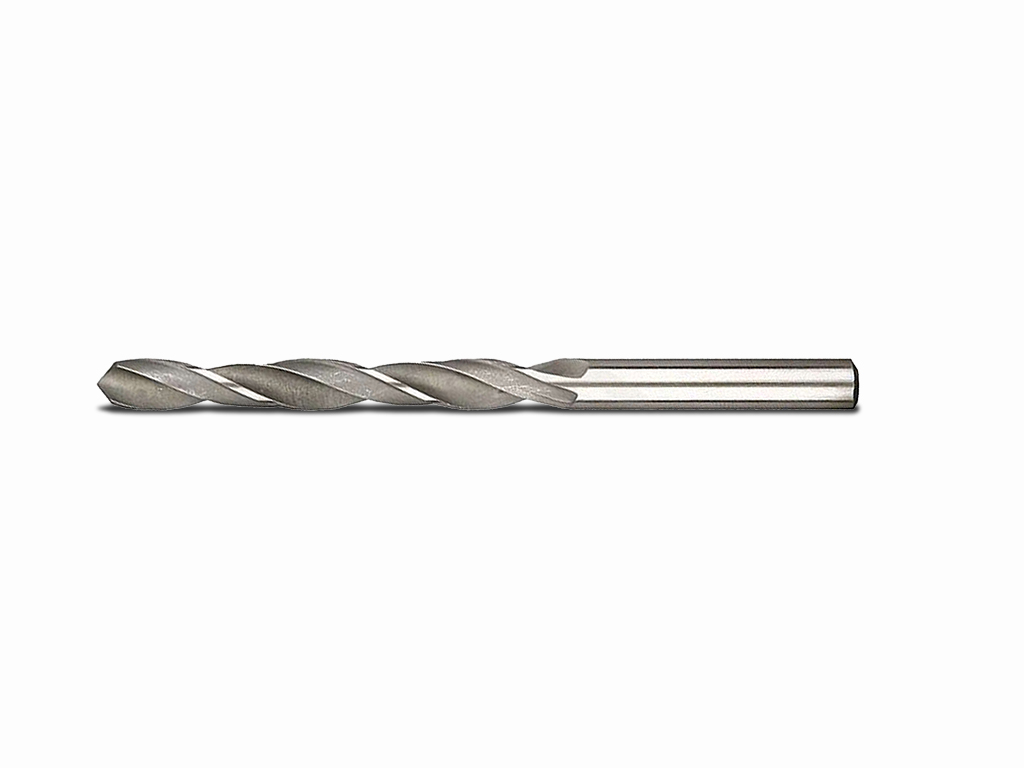
Jobber Drills DIN 338 RN
DIN 338 jobber twist drills in RN execution are designed for drilling holes in metal workpieces. Their standard-length design provides a practical balance between rigidity, drilling depth and reach for general workshop and production applications.
Applications:
Used for drilling through holes and blind holes in metal parts, including maintenance, assembly and general machining work. Suitability for a particular workpiece material depends on the drill material, coating and manufacturer’s recommendations.
Operating Principle:
As the drill rotates, its cutting edges remove material while the spiral flutes carry chips away from the cutting zone. Hole diameter and surface quality depend on spindle runout, clamping accuracy, cutting edge condition and operating parameters.
Diameter and Length:
The drill diameter determines the nominal hole size. Overall length and flute length vary with the selected size. The jobber-length design offers greater reach than a comparable stubby drill, while requiring attention to tool overhang and alignment.
Cutting Section:
The spiral flutes provide space for chip formation and evacuation. As drilling depth increases, chip removal becomes more demanding. Use an appropriate withdrawal cycle when necessary, and leave sufficient flute length outside the hole for chips to escape.
Tool Geometry:
DIN 338 specifies the dimensional series for jobber-length twist drills. RN identifies the tool execution. Specific point and helix angles, drill material and coating should be checked in the specifications of the selected drill.
Practical Recommendations:
Secure the workpiece and clamp the drill with the minimum overhang required for the operation. Start drilling with accurate positioning and a steady axial feed. Use suitable coolant or lubricant, monitor chip evacuation and reduce feed as the drill breaks through the workpiece.
Specifications:
- Tool type: twist drill for metal
- Series: jobber length
- Standard: DIN 338
- Execution: RN
- Diameter: depends on the selected size
- Overall length: depends on the selected size
- Flute length: depends on the selected size
Cutting Characteristics:
The standard-length design supports a wide range of drilling tasks. Stable clamping, low runout and effective chip evacuation help maintain consistent hole quality and reduce the risk of tool damage.
Cutting Parameters:
Select spindle speed and feed according to drill diameter, drill material, workpiece material, hole depth and cooling conditions. Adjust the drilling cycle as needed to prevent chip packing.
Suitable Operations:
- Drilling through holes and blind holes
- General workshop and production drilling
- Preparing holes for subsequent tapping or reaming
- Maintenance and assembly work on metal components
Limitations:
Available drilling depth and reach depend on the selected tool dimensions and chip evacuation conditions. These drills are not intended for side milling or enlarging holes through lateral pressure. Applications requiring tight diameter tolerances may need a subsequent finishing operation.