
28.5 / 460 mm Extra long taper shank drills DIN 341 RN
| drill bit diameter | 28.5 |
|---|---|
| Lt | 460 |
| Lc | 305 |
| shank type | MT3 |
| Material | HSS |
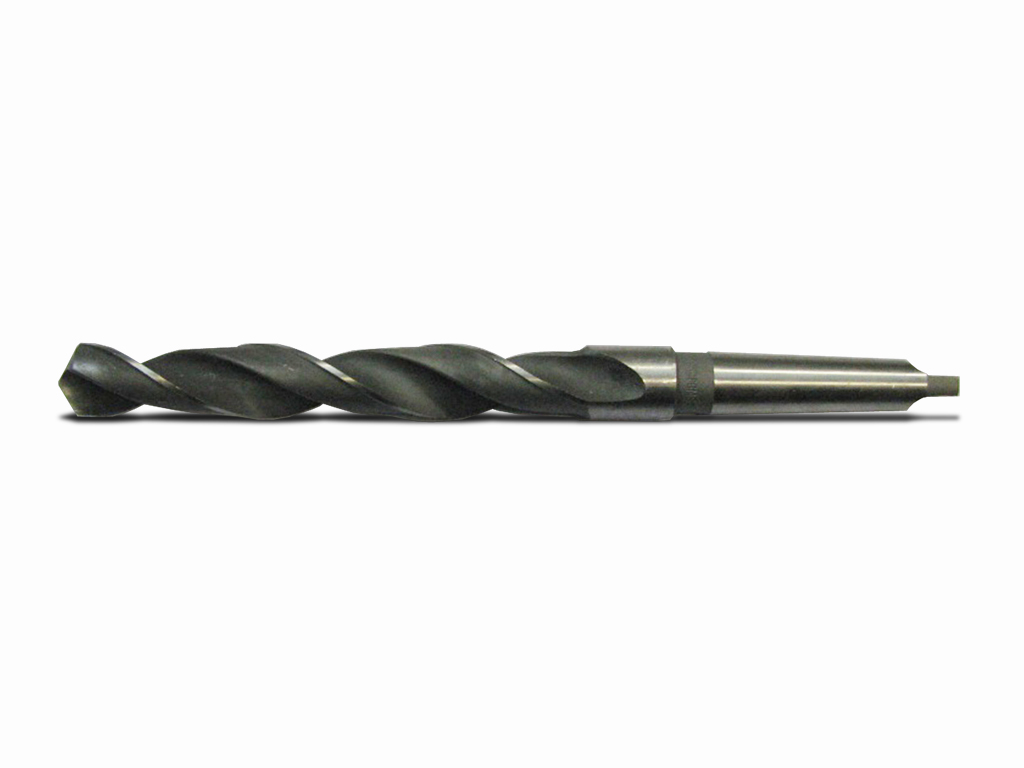
Extra Long Taper Shank Drills DIN 341 RN
DIN 341 taper shank drills in RN execution provide extended reach for drilling metal components. Their increased overall and flute lengths allow access to drilling locations beyond the reach of comparable standard-length drills. The Morse taper shank fits a matching machine spindle socket or suitable adapter sleeve.
Applications:
Used for drilling through holes and blind holes, reaching recessed surfaces and machining components that require longer tooling. Suitable for drilling machines, lathes and other equipment with compatible taper toolholding. Workpiece material compatibility depends on the drill material, geometry and manufacturer’s recommendations.
Operating Principle:
The cutting edges remove material through relative rotation between the drill and workpiece, while the spiral flutes carry chips away from the cutting zone. Correctly seated taper surfaces locate the tool and transmit torque through friction. The extended drill body requires accurate alignment and controlled feed to limit deflection.
Diameter and Length:
The drill diameter determines the nominal hole size. Overall length, flute length and Morse taper size depend on the selected drill. Extended reach does not mean that the full flute length can be used as drilling depth: chip evacuation, coolant access and setup rigidity also determine working capacity.
Cutting Section:
Longer flutes provide an extended path for chip evacuation. As hole depth increases, accumulated chips can raise cutting resistance and torque. Use an appropriate withdrawal cycle when necessary, leaving enough flute length outside the hole for chips to escape.
Tool Geometry:
DIN 341 specifies the dimensional series for long twist drills with Morse taper shanks. RN identifies the tool execution. Exact point and helix angles, cutting material and any surface treatment should be checked in the specifications of the selected drill.
Practical Recommendations:
Clean and inspect both mating taper surfaces, confirm the correct taper size and seat the drill according to the machine manufacturer’s instructions. Secure the workpiece and check spindle alignment. Follow the tool manufacturer’s guidance on starting-hole preparation or additional guidance. Apply steady axial feed, suitable cutting fluid and regular chip-clearing withdrawals as required.
Specifications:
- Tool type: extended-length taper shank twist drill
- Standard: DIN 341
- Execution: RN
- Shank type: Morse taper
- Morse taper size: depends on the selected drill
- Diameter: depends on the selected size
- Overall length: depends on the selected size
- Flute length: depends on the selected size
Cutting Characteristics:
The extended design increases reach but has lower resistance to bending than a shorter drill of the same diameter. Stable taper seating, accurate guidance and effective chip removal help control vibration and maintain the drilling direction.
Cutting Parameters:
Select spindle speed and feed according to drill diameter, tool material, workpiece material and hardness, hole depth and setup rigidity. Follow the manufacturer’s cutting data and account for the machine’s available torque, axial force and coolant delivery.
Suitable Operations:
- Drilling metal components requiring extended reach
- Accessing recessed drilling locations
- Producing through holes and blind holes within the tool’s working capacity
- Drilling on equipment with compatible Morse taper sockets
Limitations:
The shank requires a matching taper socket or suitable adapter. Extended length increases sensitivity to lateral loads, vibration and misalignment. Avoid chip blockage and incorrect taper seating. Deep holes with demanding straightness or dimensional tolerances may require additional guidance, specialised tooling or subsequent finishing.