
10.3 / 265 mm Extra long straight shank drills DIN 1869 RN
| drill bit diameter | 10.3 |
|---|---|
| Lt | 265 |
| Lc | 185 |
| shank type | HA |
| Material | HSS |
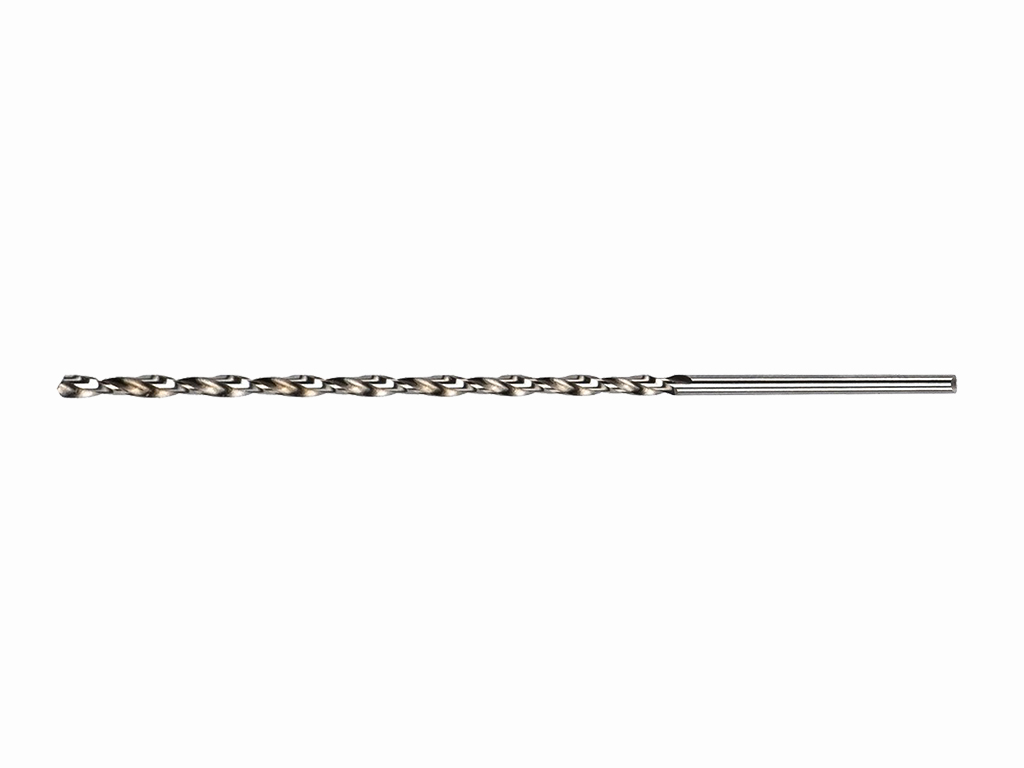
Extra Long Straight Shank Drills DIN 1869 RN
DIN 1869 extra long straight shank drills in RN execution are designed for drilling metal components where extended reach is required. Their increased overall and flute lengths provide access to drilling locations beyond the reach of conventional jobber and long series drills.
Applications:
Used for drilling through holes and blind holes, reaching recessed surfaces and working on components with deep or restricted access. Suitability for a particular metal depends on the drill material, geometry, surface treatment and manufacturer’s recommended application range.
Operating Principle:
As the drill rotates, its cutting edges remove material while the spiral flutes carry chips away from the cutting zone. The extra long design increases sensitivity to deflection, vibration and misalignment. Accurate starting guidance and controlled axial feed help maintain the drilling direction.
Diameter and Length:
The drill diameter determines the nominal hole size. Overall length and flute length depend on the selected size and length variant. Extended reach does not automatically mean that the full flute length can be used as drilling depth: chip evacuation, coolant access and tool stability also limit working capacity.
Cutting Section:
As hole depth increases, chips must travel farther before leaving the hole. Accumulated chips can increase torque, damage the hole surface and cause drill breakage. Use a withdrawal cycle suited to the tool and workpiece, clearing chips before the flutes become packed.
Tool Geometry:
DIN 1869 identifies the extra long straight shank drill series. RN identifies the tool execution. Specific length variants, point and helix angles, cutting material and any coating should be checked in the specifications of the selected drill.
Practical Recommendations:
Secure the workpiece, check spindle runout and minimise unsupported tool length wherever the setup permits. Follow the manufacturer’s guidance on pilot holes, starting-hole preparation or drill bushings. Apply a steady axial feed, provide suitable cutting fluid and withdraw the drill as needed to maintain chip clearance.
Specifications:
- Tool type: extra long twist drill for metal
- Standard: DIN 1869
- Execution: RN
- Shank type: straight
- Diameter: depends on the selected size
- Overall length: depends on the selected size and variant
- Flute length: depends on the selected size and variant
Cutting Characteristics:
The extended design provides additional reach but has lower resistance to bending than a shorter drill of the same diameter. Stable guidance, low runout and effective chip evacuation are essential for consistent drilling.
Cutting Parameters:
Select spindle speed and feed according to drill diameter, tool material, workpiece material, hole depth and setup rigidity. Follow the manufacturer’s recommendations for entry, drilling and withdrawal, particularly when a large portion of the tool is unsupported.
Suitable Operations:
- Drilling locations requiring extra reach
- Accessing deeply recessed surfaces
- Producing through holes and blind holes within the tool’s working capacity
- Machining components that require extended tooling access
Limitations:
Extra long drills require careful alignment and may need additional guidance. Avoid lateral loads, excessive feed and chip blockage. Overall length and flute length alone do not establish maximum drilling depth. Deep holes with demanding straightness or dimensional tolerances may require specialised deep-hole tooling or subsequent finishing.